You do not need fluent French to enjoy France. You need a few dozen phrases, used at the right moment and with a smile. Here are the ones that matter most, organised by situation, with a simple pronunciation guide and a note on when to use each one.
Three things to know before you say a word
Learning basic French phrases is easy. Knowing how the French use them is what makes the difference, and three habits will take you a long way.
First, always start with bonjour. It is not a nicety, it is the rule. Walking into a bakery, approaching a market stall or stopping someone in the street without saying bonjour first is considered rude, and it explains many of the cold receptions travellers complain about. Say it, and the whole exchange changes.
Second, use vous. French has two words for you: tu, for friends, family and children, and vous, for everyone else. Every phrase in this guide uses vous, which is always the safe choice with someone you have just met.
Third, keep speaking French, even imperfectly. Many people will switch to English to help you. Thank them, and carry on in French: your accent is not a problem, and the effort is always noticed. If you are learning the language, that effort is precisely what you came for.
A word on pronunciation: the guide below is an approximation written for English speakers, with the stressed syllable in capitals. French rarely pronounces final consonants, its r comes from the back of the throat, and several vowels are nasal (bon, vin, un). Listening to a native speaker, and being corrected by one, remains the only way to get them right.
Greetings and polite words: the phrases you will use every hour
Bonjour · Hello / Good morning
bohn-ZHOOR
The one word you cannot skip. Say it when you walk into any shop, café or office, before anything else.
Bonsoir · Good evening
bohn-SWAHR
Replaces bonjour from around 6 pm.
Au revoir · Goodbye
oh ruh-VWAHR
Always say it when leaving a shop, even if you bought nothing.
S’il vous plaît · Please
seel voo PLEH
Goes at the end of every request.
Merci beaucoup · Thank you very much
mehr-SEE boh-KOO
Excusez-moi · Excuse me
ex-kew-ZAY MWAH
To get someone’s attention or to apologise.
Pardon · Sorry
pahr-DOHN
Bumping into someone, squeezing past in a crowd.
Je suis désolé / désolée · I am sorry
zhuh swee day-zoh-LAY
For a real apology: a mistake, a delay. Désolé for a man, désolée for a woman.
Introducing yourself and making conversation
In villages and small towns, people take the time to talk. A few sentences about who you are and why you are here open more doors than any guidebook.
Je m’appelle… · My name is…
zhuh mah-PELL
Enchanté / Enchantée · Nice to meet you
ahn-shahn-TAY
Enchanté if you are a man, enchantée if you are a woman. Same pronunciation.
Comment allez-vous ? · How are you?
koh-mahn tah-lay VOO
The polite form. Ça va ? is the casual version, for people you already know.
Très bien, merci. Et vous ? · Very well, thank you. And you?
treh byan mehr-SEE, ay VOO
Je viens des États-Unis / d’Angleterre · I am from the United States / from England
zhuh vyan day zay-tah-zew-NEE / dahn-gluh-TAIR
Also: du Canada, d’Australie, d’Irlande.
Je suis ici pour apprendre le français · I am here to learn French
zhuh swee zee-SEE poor ah-PRAHN-druh luh frahn-SEH
Say this early: people slow down, and many will help you.
When you do not understand: the phrases that keep the conversation going
This is the section most travellers skip, and the one that matters most. The moment you do not understand is not a failure: it is the moment you learn something, provided you keep the exchange alive instead of nodding and moving on.
Je ne comprends pas · I don’t understand
zhuh nuh kohm-PRAHN pah
Pouvez-vous répéter, s’il vous plaît ? · Could you repeat, please?
poo-vay VOO ray-pay-TAY, seel voo PLEH
Nobody minds. Asking is far better than nodding without understanding.
Plus lentement, s’il vous plaît · More slowly, please
plew lahnt-MAHN, seel voo PLEH
Comment dit-on… en français ? · How do you say… in French?
koh-mahn dee-TOHN… ahn frahn-SEH
Point at the thing if you have to. It works.
Qu’est-ce que ça veut dire ? · What does that mean?
kess kuh sah vuh DEER
Je parle un peu français · I speak a little French
zhuh parl uhn puh frahn-SEH
Modest, and it sets the right expectations.
Je préfère parler français, si ça ne vous dérange pas · I would rather speak French, if you don’t mind
zhuh pray-FAIR pahr-LAY frahn-SEH, see sah nuh voo day-RAHNZH pah
For when someone kindly switches to English. Most people are delighted to switch back.
At the café and the restaurant
Ordering is usually the first time a traveller speaks French to a stranger, and it is a forgiving place to start: the vocabulary is small, the waiter has heard every accent, and the reward arrives on a plate.
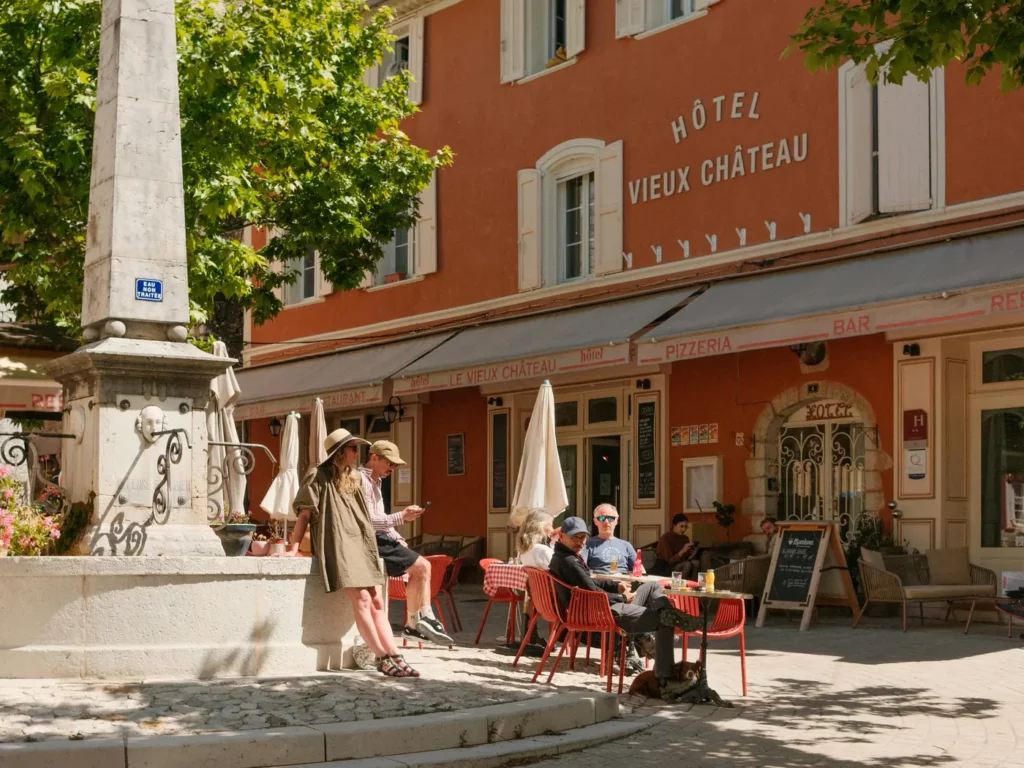
Une table pour deux, s’il vous plaît · A table for two, please
ewn TAH-bluh poor DUH, seel voo PLEH
Je voudrais… · I would like…
zhuh voo-DREH
The polite way to order anything, anywhere. Never je veux (I want).
Pour moi, ce sera… · For me, it will be…
poor MWAH, suh suh-RAH
The natural way to give your order once the waiter is at the table.
Une carafe d’eau, s’il vous plaît · A jug of tap water, please
ewn kah-RAHF DOH, seel voo PLEH
Tap water is free in every French restaurant, and perfectly good. Ask for it by name, or you may be served bottled water.
Qu’est-ce que vous me conseillez ? · What do you recommend?
kess kuh voo muh kohn-say-YAY
Waiters love this question. It often starts a real conversation.
Un café, s’il vous plaît · An espresso, please
uhn kah-FAY, seel voo PLEH
Un café is a small espresso. For a longer coffee ask for un café allongé; with milk, un café crème.
Bon appétit · Enjoy your meal
bohn nah-pay-TEE
Said to everyone at the table before eating.
C’était délicieux · It was delicious
say-TEH day-lee-SYUH
Say it to the waiter or your host. It is always appreciated.
L’addition, s’il vous plaît · The bill, please
lah-dee-SYOHN, seel voo PLEH
In France the bill does not come until you ask for it. That is not neglect, it is courtesy: nobody is rushing you.
At the market and in the shops
The weekly market is where French comes alive: prices are called out, produce is discussed, and nobody is in a hurry. It is also the best place to practise, because every stall is a short, friendly conversation waiting to happen.
Une baguette, s’il vous plaît · A baguette, please
ewn bah-GET, seel voo PLEH
Ask for une tradition for the crustier, tastier version made under the French bread law.
Je voudrais un kilo de… · I would like a kilo of…
zhuh voo-DREH uhn kee-LOH duh
At the market: de tomates, de pêches, de cerises. Half a kilo: une livre.
C’est combien ? · How much is it?
say kohm-BYAN
Je regarde, merci · I am just looking, thank you
zhuh ruh-GARD, mehr-SEE
The polite answer when a shopkeeper asks if you need help.
Je vais prendre ça · I will take this
zhuh vay PRAHN-druh sah
Vous acceptez la carte ? · Do you take cards?
voo zak-sep-TAY lah KART
Most places do, but small market stalls often prefer cash.
Getting around and asking for directions
In a village, asking for directions is often the start of a chat rather than a quick answer. Ask in French, listen for the three direction words below, and do not hesitate to ask again.
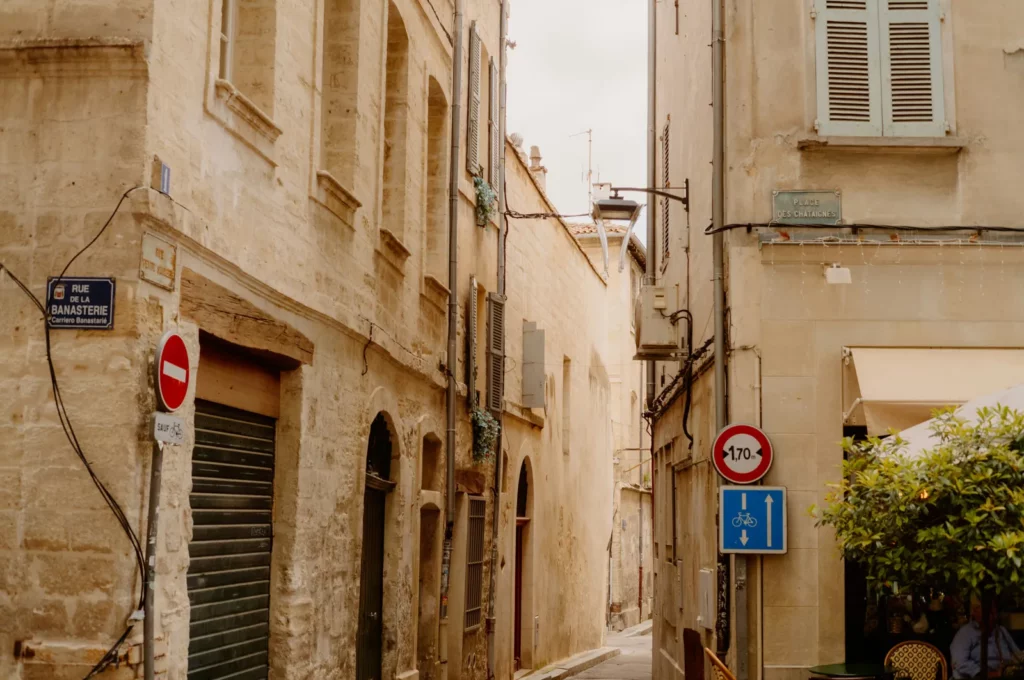
Excusez-moi, je cherche… · Excuse me, I am looking for…
ex-kew-ZAY MWAH, zhuh SHAIRSH
The gentlest way to ask for directions: la gare, la poste, l’office de tourisme.
Où sont les toilettes ? · Where are the toilets?
oo sohn lay twah-LET
Always plural in French.
C’est loin ? · Is it far?
say LWAN
À gauche / à droite / tout droit · Left / right / straight ahead
ah GOHSH / ah DRWAHT / too DRWAH
The three words you need to understand the answer.
Un billet pour Nice, s’il vous plaît · A ticket to Nice, please
uhn bee-YEH poor NEES, seel voo PLEH
Un aller simple: one way. Un aller-retour: return.
À quelle heure part le prochain train ? · What time does the next train leave?
ah kell UHR par luh proh-SHAN TRAN
Everyday courtesy that makes a difference
These last few phrases are not strictly necessary. They are the ones that turn a transaction into a pleasant exchange, and they are what people remember about you.
Bonne journée · Have a good day
bun zhoor-NAY
The standard way to close any exchange before the evening.
Bonne soirée · Have a good evening
bun swah-RAY
Je vous en prie · You are welcome
zhuh voo zahn PREE
The polite reply to merci. De rien is the more casual version.
Avec plaisir · With pleasure
ah-vek play-ZEER
A warm way to say yes, or to answer a thank you.
À bientôt · See you soon
ah byan-TOH
For people you hope to see again. À demain: see you tomorrow.
Frequently asked questions
What is the most important French phrase to know?
Bonjour. Everything else follows from it. Add s’il vous plaît, merci and au revoir and you already have the four words that shape every interaction in France.
How many French phrases do you need to get by in France?
A few dozen well-chosen phrases cover most everyday situations: greeting people, ordering, asking for something, thanking. What makes the difference is not the number of phrases you know, but how comfortably you use them, and that comfort only comes from practising with native speakers. And if you are wondering how long it takes to go from these phrases to a real conversation, our article on how long it takes to learn French gives a realistic answer, level by level.
How do you learn to pronounce French phrases correctly?
Written guides like this one help you get started, but French nasal vowels and the French r cannot be learnt from paper. The fastest way is to hear the phrases from a native speaker and be corrected gently, again and again, in real situations. That is exactly what an immersion stay is designed for.
From phrases to real conversations
A list gets you through your first café and your first market. Conversation is what comes next, and it only develops by living in French for a while: talking at breakfast, at the bakery, on a walk through the village, with someone who corrects you kindly. That is what our immersion method offers in Fayence, in Provence: daily lessons with Marie and a week of everyday life in French, with a day of French immersion in Provence to give you an idea. If you would rather start from home, online French lessons are the natural first step. Have a look at the stay packages and rates, or contact Marie: she replies personally within 24 to 48 hours.