Type this question into a search engine and you get two kinds of answers: forum threads where everyone swears by a different app, and lists of twenty tips that never say which one matters. Here is a more useful answer. There is no single best method. There are three ingredients, six ways of getting them, and a combination that depends on what you want French for. The comparison below shows what each method really does, and the ingredient most learners never get.
Six ways to learn French, compared
Three things make any method work. The first is daily contact with the language, even ten minutes. The second is someone who corrects what you cannot hear yourself: the nasal vowel you flatten, the gender you keep getting wrong. The third is conversation with something at stake, where the other person might answer something you did not expect and you have to cope. Each of the six methods below provides one or two of the three.
Each is genuinely good at something, and each is quietly bad at something else. The table says both, because the third column is the one the brochures leave out.
| Method | What it does well | What it does not do | Budget |
|---|---|---|---|
| Apps (Duolingo, Babbel and the like) | Build vocabulary and a daily habit; a painless first month. | Teach you to speak: nobody answers back, nobody corrects your pronunciation. | Free, or a small monthly subscription |
| Films, series, podcasts, books | Train your ear to real French at real speed, for free, in your own time. | Make you say a single sentence; mistakes go uncorrected. | Free |
| One-to-one lessons with a teacher | Give structure, correct what you cannot hear, adapt to you; online, they fit any schedule. | Provide the hours of exposure in between: one lesson a week is one lesson a week. | Billed by the hour; varies widely with the teacher and the platform |
| Group classes (evening classes, language institutes) | Regularity, a programme over months, the company of other learners. | Give you much speaking time: an hour shared by ten people is six minutes each, at the group’s pace. | A few hundred euros a term, depending on the institute |
| Conversation partners, tandems, language exchanges | Speaking time with a real person, often for free: the ingredient every other method lacks. | Correct you reliably: a partner lets mistakes pass out of politeness, and some settle in. | Free, or the price of a coffee |
| Immersion with a teacher (homestay) | All three ingredients at once, for a short time: lessons, correction and French all day. | Replace regular practice before and after; it is also the most expensive option per day and requires travelling. | The highest per day, but lessons, board and activities are included |
Budgets are orders of magnitude. Prices vary a great deal with the country, the teacher and the institution.
What each method really does
Apps: the easiest start, and the easiest place to get stuck
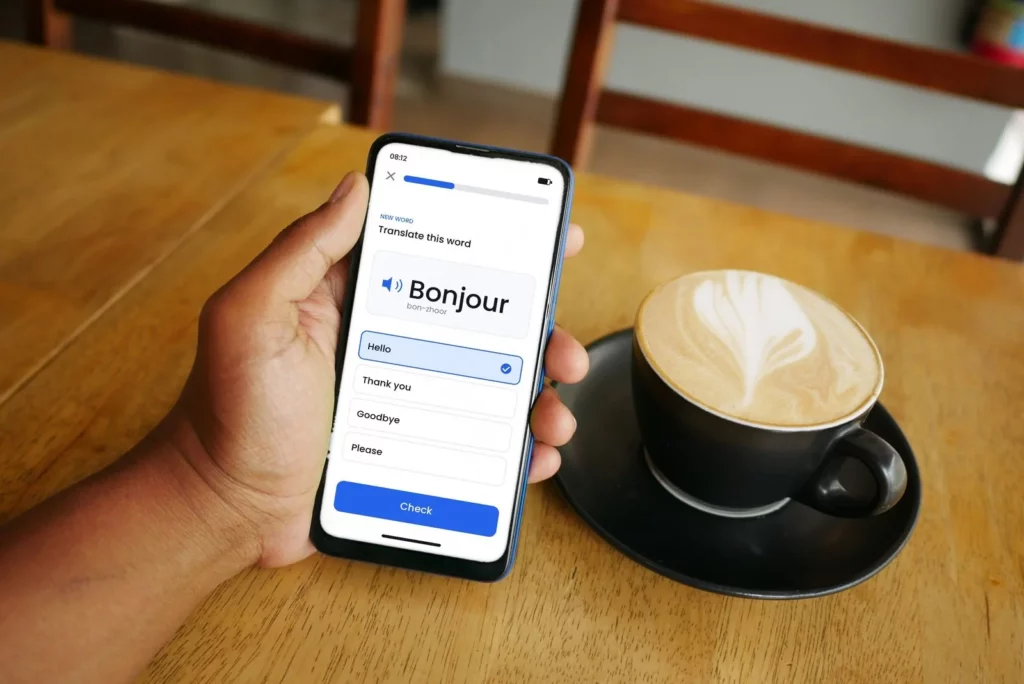
Duolingo, Babbel and their cousins are excellent at one thing: getting you to open the app every day. That habit is worth more than it looks, and the first few hundred words arrive almost painlessly. The limit appears around the third month. You recognise more and more, you can still say almost nothing, and the app never notices, because it never asks you a question it did not write itself.
Films, series and podcasts: free, effective, and silent
Listening to French at real speed trains your ear in a way no lesson can, and it costs nothing. Series with French subtitles, a podcast on your commute, a newspaper article a day: this is where most of your exposure hours should come from. What it will never do is make you say a sentence. Comprehension grows, speaking waits.
Lessons with a teacher: the part you cannot do alone
A good teacher does three things you cannot do for yourself: hears the mistakes you do not hear, explains why they are mistakes, and builds the next lesson around what you actually need rather than around chapter nine. One-to-one online lessons work exactly like lessons in person, by video, and fit any schedule and any country. The limit is arithmetic: one lesson a week is one hour a week. What happens in the other hundred and sixty-seven decides how far that lesson carries you.
Group classes: regular, sociable, and slow to make you speak
Evening classes and language institutes provide something apps cannot: a programme, a date in your diary and other people on the same road. The weak point is speaking time. An hour shared by ten learners is six minutes of French each, at the pace of the group rather than yours. Good for structure and company, less good if your goal is to hold a conversation soon.
Conversation partners and language exchanges: the missing ingredient, often free
A tandem, where you give an hour of your language against an hour of French, a conversation group in your town, or an exchange partner online: these provide what every other method lacks, speaking time with someone who answers back. The weak point is correction. A partner will let your mistakes pass out of politeness, and some of them will settle in. Pair it with someone who catches them, and it is one of the most effective hours of your week.
Immersion with a teacher: everything at once, for a short time
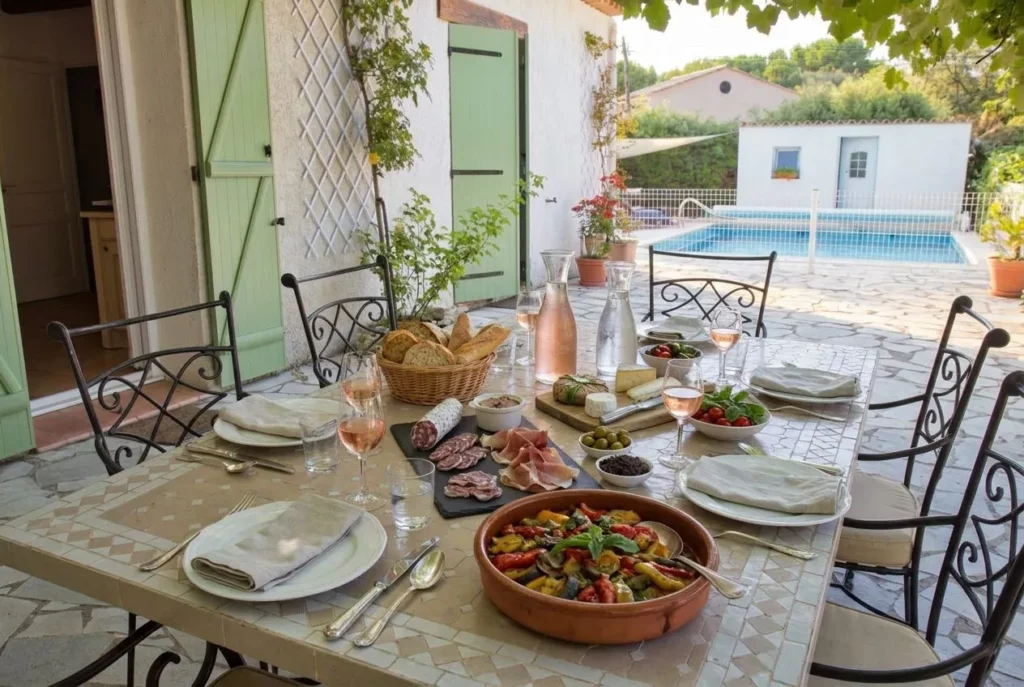
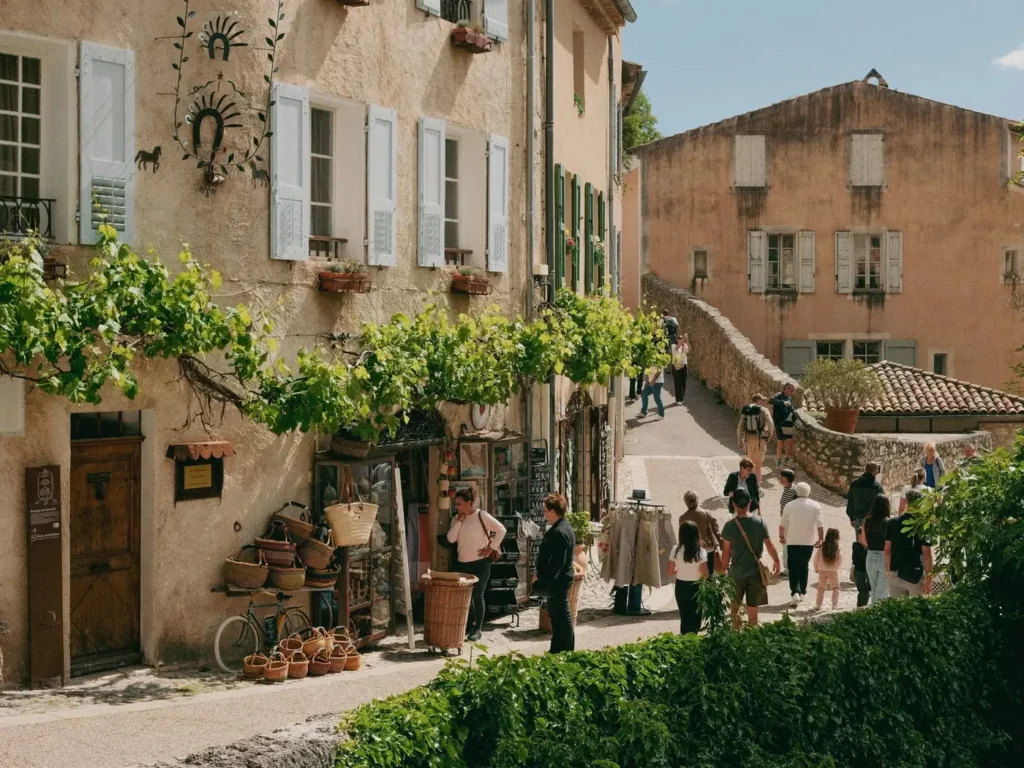
Staying with a teacher in France is the only format where the three ingredients coincide: lessons in the morning, with the correction that goes with them, then the rest of the day in French, at lunch, at the market, at dinner. A day of French immersion in Provence shows what that looks like in practice. It is also the most expensive option per day, it means travelling, and a week accelerates what you do before and after rather than replacing it. Beginners are welcome and they progress, but the week pays far more when it lands on a few weeks of regular practice.
How to combine them, depending on your goal
“Best” only means something once you know what for. Three goals cover most learners, and each has its own mix.
You want to get by on your next trip to France
You do not need a method, you need a few dozen phrases and the confidence to use them. Learn the ones in our guide to common French phrases for a stay in France, take three or four lessons to fix the pronunciation of bonjour, s’il vous plaît and the numbers, and use them on the first morning, at the bakery. Two months of ten minutes a day is enough.
You want to hold a real conversation
This is where the three ingredients become non-negotiable. Daily exposure through series and podcasts; a weekly lesson with someone who corrects you; and conversation, which is the hard part to organise from home. Most people reach this point after a few months of lessons, understand a great deal, and stall. What unblocks the move from understanding to speaking is a period where speaking is no longer optional: a tandem every week, a trip where you refuse to switch to English, or a stay where the whole day happens in French. Our article on going from online lessons to an immersion stay describes one version of that sequence.
You want to live in France, or spend part of the year there
Same recipe, more volume, and a clear target: B2, the level at which you can deal with a bank, a doctor and a neighbour without rehearsing. Count on several hundred hours, which our article on how long it takes to learn Frenchlays out level by level, and make sure a good share of them are spoken, not just heard.
| Goal | Every week | What accelerates it |
|---|---|---|
| Get by on a trip | Ten minutes a day on phrases and listening; three or four lessons for pronunciation. | Speaking from the first morning, without waiting to be ready. |
| Hold a conversation | One lesson with a teacher, daily listening, a conversation whenever you can find one. | A period where speaking is not optional: a weekly tandem, a trip, an immersion stay. |
| Live in France | The same, with more hours, aiming at B2. | Time spent among French speakers every year, and French in your daily life in between. |
Why most learners plateau, and how to get past it
The plateau almost always looks the same. Six months in, you follow the conversation at the next table, you read the menu without effort, and when the waiter turns to you the sentence does not come. It is not a lack of vocabulary. It is that every hour you have put in has been receptive, and speaking is a separate skill that only grows when it is used.
The way out is not another app. It is conversation with correction: someone who lets you finish your clumsy sentence, then gives you the better version, in a situation where you needed the sentence in the first place. That can be a conversation partner, a patient friend, a teacher who runs the lesson as a dialogue, or a stay where the whole day is the lesson.

So, what is the best way to learn French?
Not a product, a rhythm. Apps and series give you the first ingredient, daily contact. Lessons give you the second, correction. Only real exchanges give you the third, conversation, and that is the one most learners never get, which is why so many of them understand far more French than they can say. The methods that feel most comfortable are the ones that make you speak the least; the ones that make you speak are the ones that move you. So the best way to learn French is a little French every day, someone who corrects you regularly, and real conversations as often as you can find them, in whatever combination your goal and your budget allow.
Whatever that combination is, the first step is the same: say something in French to someone who answers, this week, badly if necessary. Then pick one source of daily French, one person who corrects you, and one regular occasion to speak. The combination you can keep up for six months beats the perfect method you abandon in March.
Frequently asked questions
What is the best way to learn French fast?
Volume and conversation, in that order. Thirty minutes a day of listening and reading, one lesson a week, and speaking as early as possible, badly if necessary. Nothing compresses the calendar more than a period where the whole day happens in French, whether that is a stay with a teacher, a job in France or a few weeks living with French speakers. Anyone promising fluency in a month is selling something.
Can you learn French with an app alone?
You can learn vocabulary with an app alone, and build a habit, which is not nothing. You cannot learn to speak with one, because speaking needs someone who answers back and someone who corrects you, and an app does neither. Keep the app for the daily ten minutes and add a teacher and conversation on top.
Is it better to learn French in France?
It is better to speak French in France, which is not quite the same thing. A stay only pays off if you are made to speak during it: a language school with small groups, a homestay with a teacher, an au pair year or a volunteering placement can all work, while a week in a hotel among tourists produces very little French. Choose a stay for the number of conversations it guarantees, not for the number of days.
What is the best way to learn French as an adult?
The same as for anyone else, with one adjustment: adults learn faster when they understand why, so choose a teacher who explains rather than drills. The research is consistent that age is a poor predictor of success. Available time and regularity are good ones, and the willingness to speak before being perfect is the best of all.
Should I take group classes or private lessons?
If your goal is to speak, private lessons, because the whole hour is yours and every sentence gets corrected. If your goal is a long, steady programme with company along the way, a group class works, as long as you add speaking time elsewhere. Many people combine the two, and in both cases the hours between lessons matter more than the format of the lesson.
A note on who wrote this: this article is published by Azur Immersion, which offers online French lessons and immersion stays with a teacher in Provence. We have tried to be as fair to the other four methods as to our own two.